
How to treat paronychia (an infected nail)

Leg Nerves Activated by Light Offer New Path to Restoring Mobility

via Medical Institution https://www.medical-institution.com/leg-nerves-activated-by-light-offer-new-path-to-restoring-mobility/
Prostate Cancer: A New, Quicker Test to Assess Metastasis Risk - Medical Institution
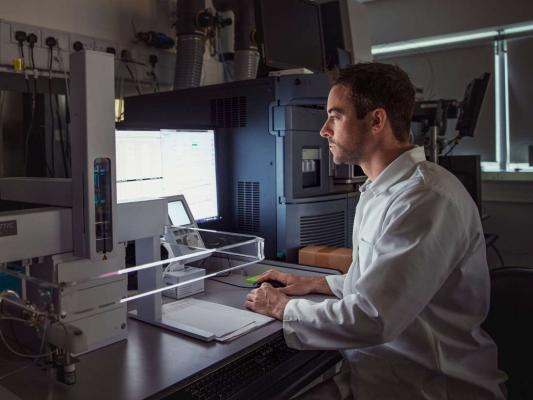
There is a risk of metastatic tumor formation for people with prostate cancer. A newly developed test can assess this risk more quickly than existing tests and is also cheaper to run.
According to the National Cancer Institute, about 11.2% of men will receive a prostate cancer diagnosis at some point in time.
In 2015 — the most recent year for which data are available — an estimated 3,120,176 men in the United States were living with prostate cancer.
Individuals with a first-time prostate cancer diagnosis and those who have undergone previous treatment for this form of cancer need to receive tests to determine their risk of metastasis.
If the risk of cancer spreading is high, the doctor may advise the person to proceed with a more aggressive type of treatment.
Researchers from the Albert Einstein College of Medicine in New York City, NY, have collaborated with colleagues from other research institutions to develop a new test for the assessment of metastasis risk. The new test, they say, is cheaper and faster than other methods currently available, and it requires only small tissue samples.
Type 2 Diabetes Mellitus – Diagnosis, Management, Treatment and Complications
TYPE 2 DIABETES MELLITUS:
Diabetes Mellitus is metabolic disorder that causes blood sugar (glucose) levels to rise higher than normal (hyperglycemia). Type 2 Diabetes Mellitus is one of the major causes of early illness and death worldwide. It is the most common form of diabetes and it accounts for over 90% of patients with diabetes. Type 2 Diabetes Mellitus is characterized by insulin resistance leading to increase insulin production by the Beta-cells of the pancreas.Over time, the insulin secretory capacity of the pancreas becomes unable to overcome insulin resistance, resulting in progressive deterioration of Beta-cell function and steady decrease in plasma insulin and subsequently an increase in plasma glucose. Although obesity is the most important risk factor for Type 2 Diabetes Mellitus, other important risks factors such as; positive family history, ethnicity (e.g. Native Americans, African Americans, Hispanics, Asian Americans and Pacific Islanders), age and gender have also been associated with increased risk for developing Type 2 Diabetes Mellitus.
DIAGNOSTIC CRITERIA BASED ON ADA GUIDELINES:
Symptoms of hyperglycemia — The diagnosis of diabetes mellitus is easily established when a patient presents with classic symptoms of hyperglycemia (thirst, polyuria, weight loss, blurry vision) and has a random blood glucose value of 200 mg/dL (11.1 mmol/L) or higher.
Asymptomatic — The diagnosis of diabetes in an asymptomatic individual can be established with any of the following criteria:
– Fasting plasma glucose (FPG) values ≥126 mg/dL (7.0 mmol/L). Fasting is defined as no caloric intake for at least eight hours.*
– Two-hour plasma glucose values of ≥200 mg/dL (11.1 mmol/L) during an oral glucose tolerance test (OGTT)
– A1C values ≥6.5 percent (48 mmol/mol)
– Fasting plasma glucose (FPG) values ≥126 mg/dL (7.0 mmol/L). Fasting is defined as no caloric intake for at least eight hours.*
– Two-hour plasma glucose values of ≥200 mg/dL (11.1 mmol/L) during an oral glucose tolerance test (OGTT)
– A1C values ≥6.5 percent (48 mmol/mol)
Categories of increased risk for diabetes:
– FPG between 100 and 125 mg/dL (5.6 to 6.9 mmol/L).
– Two-hour plasma glucose value during a 75 g OGTT between 140 and 199 mg/dL (7.8 to 11.0 mmol/L).
– Persons with 5.7 to 6.4 percent (39 to 46 mmol/mol), (6.0 to 6.4 percent [42 to 46 mmol/mol] in the International Expert Committee report) are at highest risk, although there is a continuum of increasing risk across the entire spectrum of A1C levels less than 6.5 percent (48 mmol/mol).
– FPG between 100 and 125 mg/dL (5.6 to 6.9 mmol/L).
– Two-hour plasma glucose value during a 75 g OGTT between 140 and 199 mg/dL (7.8 to 11.0 mmol/L).
– Persons with 5.7 to 6.4 percent (39 to 46 mmol/mol), (6.0 to 6.4 percent [42 to 46 mmol/mol] in the International Expert Committee report) are at highest risk, although there is a continuum of increasing risk across the entire spectrum of A1C levels less than 6.5 percent (48 mmol/mol).
Read more
New high-tech epilepsy warning bracelet could save lives - Medical Institution

Smartwatches are gaining popularity, and they often help users monitor their health in different ways, such as by recording sleeping habits or heart rates.
A new seizure-detecting device, the Nightwatch, goes a crucial step further and can alert caregivers to severe nighttime seizures.
The researchers, who published their results in the journal Neurology, believe that this bracelet could be a vital tool for people with epilepsy.
Sudden unexpected death in epilepsy (SUDEP) is the leading cause of death in those with the condition. The risks of death are even higher in people who have therapy-resistant epilepsy and an intellectual disability.
The research team, based in the Netherlands, tested the Nightwatch with 28 intellectually disabled participants who have epilepsy.
Mediterranean diet nutrients tied with healthy brain aging

Eating a diet rich in fruits and vegetables can promote healthy brain aging.
It found links between blood markers of certain nutrients in the Mediterranean diet and mental performance and brain connectivity in older adults.
Previous research suggested that older adults who most closely follow a Mediterranean diet have better brain function.
Steps of Glycolysis Reactions - Animation - SUPER EASY
Steps of Glycolysis Reactions - Animation
Steps of Glycolysis Reactions - Animation - SUPER EASY
Glycolysis, part of cellular respiration, is a sequence of reactions that constitute the first phase of most carbohydrate catabolism (catabolism meaning the breaking down of larger molecules into smaller ones). Glycolysis occurs in most organisms in the cytosol of the cell. In glycolysis glucose, which is a form of sugar is eventually converted to pyruvate. The pyruvate end product of glycolysis can be used in either anaerobic respiration if no oxygen is available or in aerobic respiration via the TCA cycle which yields much more usable energy for the cell.
ASSOCIATED VIDEOS:
-- Electron Transport Chain (ETC) - Oxidative Phosphorylation: https://goo.gl/05oOpi
Transcription and Translation ANIMATION - MADE EASY
Transcription and Translation Explained.
✔✔✔ FOR MORE MEDICAL VIDEOS VISIT: https://freemedicalvideos.com/
CLICK HERE to Subscribe to our YouTube Channel.
What is transcription? Transcription is the process of making RNA from a DNA template. Several key factors are involved in this process. Including, DNA, transcription factors, RNA polymerase, and ATP. Transcription begins with a strand of DNA. It is divided into several important regions. The largest of these is the transcription unit. This portion of the DNA will be used to produce RNA. Upstream of the transcription unit is the TATA box. An enhancer region may also be involved. Several complexes, known as transcription factors, are required for successful transcription. The first is TFIID, the largest of the general factors. A component of this factor, TBP, binds to the DNA using the TATA box to position TFIID near the transcription initiation site. Other transcription factors, including TFIIA and TFIIB, then attach. These complexes prepare the DNA for the successful binding of RNA polymerase. One RNA polymerase is bound, other transcription factors complete the mature transcription complex. Now, energy must be added to the system for transcription to begin. This energy is provided by the reduction of ATP into ADP and Pi. RNA polymerase then synthesizes an RNA template from the strand of DNA. Most factors are released after transcription begins. When the end of the transcription unit is reached, the RNA polymerase dissociates, and the newly formed strand of RNA is released.
What is Translation? Translation is the synthesis of a protein from an mRNA template. This process involves several key molecules including mRNA, the small and large subunits of the ribosome, tRNA, and finally, the release factor. The process is broken into three stages: initiation, elongation, and termination. Eukaryotic mRNA, the substrate for translation, has a unique 3′-end called the poly-A tail. mRNA also contains codons that will encode specific amino acids. A methylated cap is found at the 5′-end. Translation initiation begins when the small subunit of the ribosome attaches to the cap and moves to the translation initiation site. tRNA is another key molecule. It contains an anticodon that is complementary to the mRNA codon to which it binds. The first codon is typically AUG. Attached to the end of tRNA is the corresponding amino acid. Methionine corresponds to the AUG codon. The large subunit now binds to create the peptidyl (or P) site and the aminoacyl (or A) site. The first tRNA occupies the P-site. The second tRNA enters the A-site and is complementary to the second codon. The methionine is transferred to the A-site amino acid, the first tRNA exits, the ribosome moves along the mRNA, and the next tRNA enters. These are the basic steps of elongation. As elongation continues, the growing peptide is continually transferred to the A-site tRNA, the ribosome moves along the mRNA, and new tRNAs enter. When a stop codon is encountered in the A-site, a release factor enters the A-site and translation is terminated. When termination is reached, the ribosome dissociates, and the newly formed protein is released.
Subscribe to:
Posts (Atom)